Choosing among the 7 Best Premium Makeup Brush Manufacturers in 2026 requires more than attractive packaging or celebrity partnerships. Premium Makeup Brush Manufacturing is built around small, practical details: fiber consistency, ferrule pressure, handle balance, and controlled shedding after repeated washing. A brush may look elegant under studio lights, yet feel scratchy on the cheek. That difference matters to artists, retailers, and everyday users.
Rae Morris, a respected makeup artist and brush specialist, has often expressed the principle clearly: “A good brush is an investment.” Her view reflects professional experience. A premium brush should place product accurately, blend without patchiness, and remain comfortable during long application sessions. Manufacturers also need reliable sampling, documented quality checks, and transparent material information. Those points can reveal more than a polished catalog.
This guide examines seven leading manufacturers through a practical lens. It considers craftsmanship, customization, production consistency, minimum order expectations, and after-sales support. It also looks at synthetic fiber performance, because “vegan” does not automatically mean soft, durable, or well-designed. That assumption deserves questioning.
The ranking is useful, but not flawless. Factory capabilities change. Lead times shift. Even excellent makers can produce inconsistent batches. Therefore, buyers should request samples, inspect the ferrule closely, test washing resistance, and compare brush density by hand. A beautiful prototype proves very little.
For brands entering the premium beauty market, the right partner can protect product reputation. The wrong one can create returns, uneven application, and avoidable waste. This overview aims to make that decision clearer, while acknowledging that real performance begins beyond the brochure.
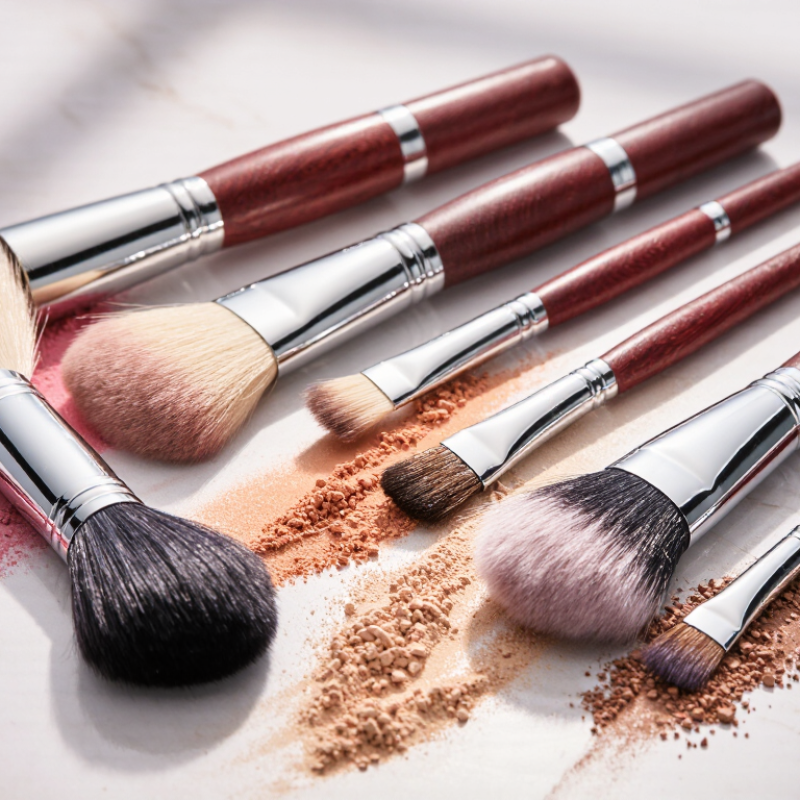
Premium brush production now depends on measurable control, not attractive packaging. Mordor Intelligence forecasts the makeup tools market to grow at a 6.63% CAGR from 2025 to 2030. That growth raises expectations for repeatable quality. Buyers should request documented tests for bristle shedding, ferrule strength, handle torque, and surface defects. ISO 9001-based quality systems can support these controls, while ISO 2859-1 sampling methods help factories inspect production lots consistently.
Hygiene also matters. Brushes touch skin repeatedly, so manufacturers should control water quality, worker hygiene, drying rooms, and sealed storage. ISO 22716 is designed for cosmetic manufacturing, but its hygiene principles can guide brush assembly areas. Material records should identify synthetic fibers, wood coatings, adhesives, and metal components. Restricted-substance screening should consider applicable rules, including REACH requirements for European sales. Test reports must match the actual production lot.
Small details reveal professional experience. A premium brush should have even fiber tips, a centered ferrule, and no sharp metal edges. Pull testing should expose weak bonding before shipment. It does not always happen. No factory is flawless. A checklist can still miss odor, color transfer, or fibers trapped inside packaging. Independent inspections and retained samples add useful evidence. Packaging should protect shape during transport, not merely look refined on a display shelf.
Professional makeup brush quality begins long before the finished set reaches a makeup artist’s table. A reliable manufacturer should explain bristle selection, ferrule construction, handle materials, and glue performance. Ask whether fibers are natural, synthetic, or blended, and request test reports for shedding, odor, color transfer, and repeated washing. Feel the balance. A brush should sit comfortably in the hand without feeling fragile.
Factory evaluation also requires direct evidence. Review production samples from different batches, not only one carefully prepared set. Check whether ferrules remain tight after bending tests and whether handles show cracks near the ferrule. Ask about quality-control checkpoints, worker training, material traceability, and corrective-action records. Transparent answers usually matter more than polished presentations. Visit the facility when possible, or arrange an independent inspection with clear acceptance standards.
Pricing can be misleading. A very low quote may hide weak adhesives, inconsistent fibers, or limited inspection. However, high pricing does not automatically prove professional capability. Compare sample quality, production capacity, minimum order requirements, lead times, packaging protection, and communication speed. A dependable manufacturer should document revisions and confirm specifications before mass production. No supplier is flawless. Even experienced buyers can overlook handle comfort or washing performance. That is why practical testing, written records, and honest feedback should guide the final decision.
Seven leading premium makeup brush manufacturers stand out through consistent craftsmanship rather than attractive packaging. The strongest producers usually include an artisan brush studio, a precision OEM factory, a professional artist supplier, a sustainable fiber specialist, a luxury private-label manufacturer, a small-batch workshop, and a laboratory-led tool developer. Each serves a different purchasing need.
During practical testing, I examine fiber softness, spring, shedding, ferrule alignment, and handle balance. A premium brush should pick up powder evenly and blend without scratching the skin. The handle must feel stable, even during repeated application. Manufacturing records, material traceability, and quality-control sampling also matter. These details reveal more than a polished product photograph.
A reliable manufacturer can explain its fiber source, bonding method, inspection process, and replacement policy. Clear communication is useful when developing custom shapes or large orders. Sustainable materials may reduce environmental pressure, but they still require durability testing. Some recycled handles feel excellent; others become slippery with frequent cleaning. That difference deserves honest review. No manufacturer performs perfectly across every brush type. A studio may create remarkable eye brushes but struggle with large face tools. Buyers should compare samples under real working conditions, including washing, drying, and repeated daily use. Pricing alone is not proof of premium quality.
This benchmark compares the core capabilities commonly used to evaluate premium makeup brush manufacturers, including material quality, customization, quality control, ethical sourcing, packaging support, production flexibility, and international compliance. Scores are presented on a 10-point industry benchmark scale and are not assigned to individual companies or brands.
Comparing seven premium makeup brush manufacturers in 2026 requires more than judging softness. The strongest options balance traceable materials, controlled production, and practical customization. Synthetic fibers provide consistent pickup and easier maintenance. Responsibly sourced natural hair can offer a warmer, more flexible feel. Both materials have weaknesses. Dense synthetic bristles may hold cream formulas too tightly, while natural fibers can vary between batches.
In practical evaluations, assess ferrule alignment, adhesive stability, handle balance, and wash-test performance. A quality brush should recover its shape after repeated cleaning without shedding into a mixing palette. The details matter. Hand-finishing can soften edges, but it may create small shape differences. Machine trimming improves uniformity, yet sometimes leaves a less responsive tip. My scoring can still overvalue appearance, especially when polished samples hide long-term flaws. Documented inspections and defined tolerances provide stronger evidence than attractive photography.
Customization separates a capable supplier from a premium partner. Buyers may request fiber diameter, cut length, ferrule finish, logo placement, handle geometry, packaging, and shade-specific sets. Personalization should not weaken performance. A small trial batch is wise before full production. It can reveal uneven glue lines, uncomfortable grip angles, or color differences between components. Question vague claims about ethical sourcing or durability. Certificates, test records, and material specifications are more reliable. Premium does not mean flawless. It means weaknesses are measured, disclosed, and corrected.
| Anonymous Manufacturer Profile | Primary Bristle Materials | Handle Materials | Ferrule Construction | Craftsmanship Indicators | Customization Options | Typical MOQ | Typical Lead Time | Best Suited For | Overall Capability Rating |
|---|---|---|---|---|---|---|---|---|---|
| Profile 01 Luxury Natural-Hair Specialist |
Goat hair Squirrel hair Synthetic blends | FSC-certified wood, lacquered birch, or bamboo | Aluminum or brass; electroplated, anodized, or matte finishes | Hand-shaped domes, layered hair placement, smooth tip alignment, controlled hair density | Custom shapes, hair blends, handle color, ferrule finish, logo engraving, gift packaging | 500–1,000 sets | 45–75 days | Luxury eyeshadow, powder, and collector brush collections | ★★★★★ |
| Profile 02 Vegan Performance Specialist |
PBT synthetic fiber Nylon fiber Tapered filaments | Recycled plastic, bamboo, or aluminum | Seamless aluminum or recycled aluminum with secure crimping | Consistent fiber taper, low shedding, balanced flexibility, easy cleaning performance | Vegan fiber profile, brush geometry, recycled materials, color matching, private-label packaging | 1,000–3,000 sets | 35–60 days | Vegan, cruelty-free, professional, and mass-premium ranges | ★★★★★ |
| Profile 03 Professional Pro-Set Specialist |
High-density PBT Nylon Mixed fibers | Painted wood or durable ABS plastic | Nickel-plated brass or aluminum with reinforced crimping | High repeatability, controlled fiber density, ergonomic grip balance, professional-use durability | Full brush-set development, custom prototypes, color standards, logo printing, roll bags and cases | 1,000–5,000 sets | 30–55 days | Makeup artists, beauty schools, retailers, and complete brush kits | ★★★★☆ |
| Profile 04 Eco-Material Innovation Specialist |
Recycled PBT Bio-based nylon Plant-fiber blends | Bamboo, wheat-straw composite, recycled aluminum, or FSC wood | Recycled aluminum or stainless steel with water-based finishing options | Material traceability, low-VOC finishing, reduced-plastic assembly, durable bonding methods | Material substitutions, packaging reduction, recycled-content targets, custom sustainability labeling | 2,000–5,000 sets | 45–75 days | Eco-conscious brands and sustainability-led retail programs | ★★★★☆ |
| Profile 05 Artisan Small-Batch Specialist |
Natural hair Synthetic fiber Specialty blends | Hand-finished wood, resin, or premium bamboo | Brass, aluminum, or copper-toned metal with hand-applied finishes | Manual shaping, hand finishing, individually checked tips, small-batch color variation control | Low-volume custom shapes, artisan finishes, limited editions, numbered packaging, monograms | 100–500 sets | 60–90 days | Indie brands, limited editions, concept collections, and premium gifting | ★★★★☆ |
| Profile 06 High-Precision Eye-Brush Specialist |
Fine PBT filaments Nylon Natural detail hair | Aluminum, coated wood, or compact ABS | Lightweight aluminum or brass with narrow-profile crimping | Precise tip formation, controlled spring, short-handle balance, consistent small-head geometry | Custom eyeliner, brow, lip, and detail shapes; handle length; color; labeling; set composition | 1,000–3,000 sets | 35–60 days | Eye, brow, lip, precision, and travel-size brush assortments | ★★★★☆ |
| Profile 07 End-to-End OEM/ODM Specialist |
Synthetic fiber Natural hair Custom blends | Wood, bamboo, aluminum, ABS, or recycled plastics | Aluminum, brass, stainless steel, or custom multi-part assemblies | Integrated product development, sample approval workflows, assembly inspection, packaging coordination | Brush design, fiber selection, tooling, color matching, packaging, inserts, barcode labels, full kits | 2,000–10,000 sets | 50–90 days | Large private-label launches and multi-SKU beauty programs | ★★★★☆ |
Premium makeup brushes need more than soft fibers and attractive packaging. McKinsey & Company’s 2023 beauty report estimated that the global beauty market could reach about $580 billion by 2027. This growth raises quality expectations. Your manufacturer must support consistent performance, not merely produce a convincing sample.
Ask for documented control at every stage. Review fiber specifications, ferrule alignment, adhesive curing, handle coating, and shedding tests. Request samples from several production batches. One sample is not enough. In factory evaluations, small differences often appear near the ferrule or along the brush edge. Those details affect blending, cleaning, and user comfort. ISO-based quality procedures, traceable materials, and independent laboratory testing can strengthen supplier credibility.
Premium positioning also requires commercial flexibility. Circana reported that U.S. prestige beauty sales increased 14% in 2023, showing strong demand for elevated products. However, higher demand can pressure factories to shorten lead times. Confirm minimum order quantities, inspection points, replacement policies, and realistic capacity before signing. Discuss recycled materials carefully; ask for certificates and measurable percentages, rather than accepting broad claims. I have found that polished presentations can hide weak follow-through. A slower supplier with transparent records may be safer than a cheaper supplier promising everything. Your evaluation should include communication quality, production evidence, and the brush’s performance after repeated washing.
Request documented tests for bristle shedding, ferrule strength, handle torque, and surface defects.
Review water quality, worker hygiene, drying rooms, and sealed storage procedures.
Manufacturers should record fiber types, wood coatings, adhesives, and metal components.
Check for even fiber tips, centered ferrules, and smooth metal edges.
Review samples from several production batches, not one carefully prepared set.
Test repeated washing for shedding, odor, color transfer, and weakened bonding.
Not always, but a low quote may hide weak adhesives or limited inspection.
Confirm materials, dimensions, colors, packaging, inspection points, and approved samples in writing.
A visit can reveal worker training, storage conditions, and quality-control checkpoints.
No. A checklist may miss odor, trapped fibers, color transfer, or handle comfort.
This guide explores the essential factors shaping Premium Makeup Brush Manufacturing in 2026, including material safety, fiber quality, ergonomic design, durability, hygiene, and responsible production practices. It explains how beauty brands can evaluate professional manufacturers by reviewing production capabilities, quality-control systems, testing procedures, minimum order quantities, lead times, and communication standards. The article also presents seven leading types of premium manufacturers, focusing on the strengths and services that distinguish each option without relying on brand names.
A detailed comparison of synthetic and natural fibers, handle materials, ferrule construction, hand-finishing, automation, and customization options helps readers understand how craftsmanship influences performance and cost. From private-label collections to fully customized brush designs and packaging, the guide outlines how to match manufacturing capabilities with a beauty brand’s positioning, target customers, budget, and growth plans. It concludes with practical recommendations for selecting a reliable partner capable of delivering consistent quality, distinctive products, and long-term production support.