0%

The best custom brush is not simply the softest one. It must feel balanced in the hand, pick up product evenly, and suit the way customers actually apply makeup. Custom Cosmetic Brush Development brings those details together, from handle shape and ferrule fit to bristle material, density, and finish. Small choices matter. A brush that looks elegant on a screen may feel heavy after several minutes of use.

Product-design researcher Don Norman offers a useful principle: “Design is really an act of communication, which means having a deep understanding of the person with whom the designer is communicating.” For beauty brands, that means translating customer needs into testable product decisions—not relying on appearance alone. Sample brushes with real formulas, check shedding and cleaning, and compare how each shape performs across different techniques. A few careful tests can reveal more than a polished presentation. Still, development is rarely perfect on the first attempt. A handle may need a second revision, or a bristle blend may feel softer but lose control. That is worth admitting. This guide explores how brands can assess suppliers, refine prototypes, and build a brush collection with a clear purpose for 2026.
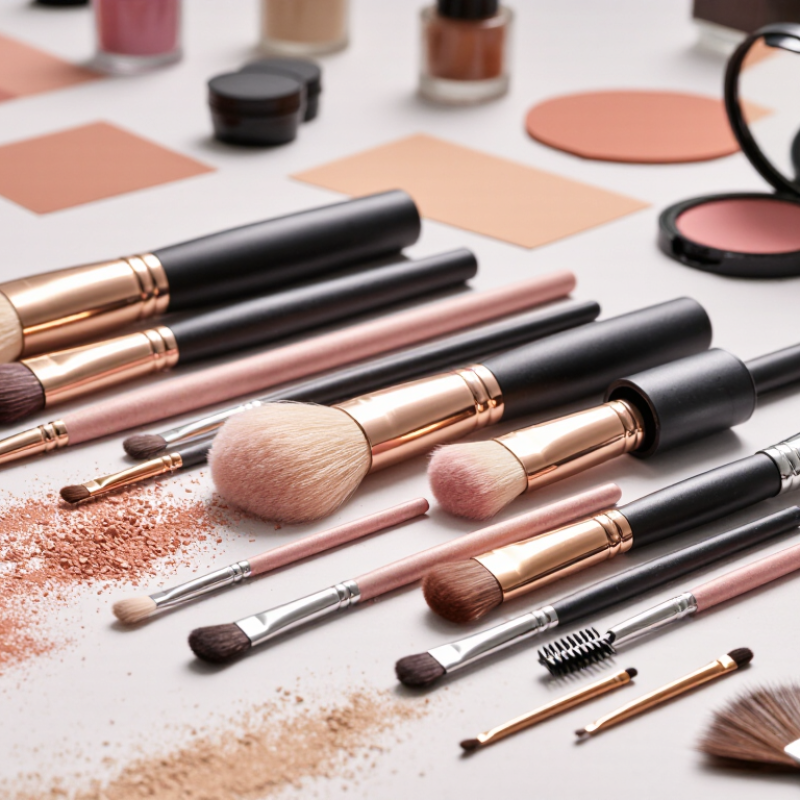
2026 Best Custom Cosmetic Brush Development for Brands?

Understanding Custom Cosmetic Brush Development for Beauty Brands

Custom cosmetic brush development for beauty brands begins with the task each brush must perform. A powder brush needs enough surface area for even coverage, while a small concealer brush needs control around narrow areas. Shape, density, and fiber length all affect how product picks up and releases. Small differences matter.

Material choices should match the intended formula and user experience. Synthetic fibers can suit many liquid or cream products, while different fiber shapes change softness and application. The ferrule must hold the brush head securely, and the handle should feel balanced in the hand. A beautiful prototype is not enough. It needs practical testing.

During sampling, check shedding, odor, handle finish, and performance after cleaning. Compare samples using the same product and application method; otherwise, feedback may be misleading. A polished sample can still mislead. Softness alone is a poor quality measure, though it is easy to focus on. Review brush performance across several uses, and record specific feedback, such as streaking or difficulty reaching the sides of the nose. Some trade-offs remain: a denser head may feel precise but take longer to clean. That deserves another round of testing.

Defining Brush Functions, User Needs, and Brand Positioning

2026 Best Custom Cosmetic Brush Development for Brands?

Defining brush functions, user needs, and brand positioning should guide development before color or packaging. Start with the task: buffing liquid foundation, placing powder around the nose, or blending shadow near the lash line. Each needs a different head shape, density, and level of flexibility. A compact brush should fit a small pouch; a longer handle may offer steadier control at a vanity. Test dry and damp use where relevant, and check for shedding, scratchiness, and product pickup. A beautiful prototype can still feel awkward after ten minutes.

User expectations matter, but broad consumer data should not be mistaken for brush-specific research. McKinsey’s 2021 report, The value of getting personalization right—or wrong—is multiplying, found that 71% of consumers expect personalized interactions. That finding supports clear, audience-led choices, not automatic product customization. Define the intended user through interviews and wear tests: hand size, routine length, preferred coverage, and cleaning habits. Then align the brush’s materials, shape, and visual cues with the brand’s intended position. One detail is easy to overlook: a soft grip may help control, yet add bulk. Test it.

Tips: Ask testers to apply product under ordinary lighting, then wash the brush several times. Record comfort and performance separately; early feedback can be inconsistent, and that is useful. Refine one variable at a time.

Selecting Brush Materials, Shapes, and Customization Options

Brush material affects pickup, release, cleaning, and the feel on skin. Soft synthetic fibers often work well with liquid and cream formulas because they absorb little product and rinse clean. For powders, compare fiber density and surface texture; a brush that feels soft can still deliver too much pigment. Natural hair may suit some powder applications, but its performance and care needs vary. Test samples with the actual formula, both dry and damp.

Shape should match the job. A flat, compact head can press foundation around the nose, while a tapered shape offers more control beneath the eyes. Rounded, loosely packed bristles help diffuse blush without leaving a sharp edge. Handle length and balance matter too: hold the prototype as a makeup artist would, then check whether it feels steady during repeated strokes. Small details matter.

Customization can include fiber color, handle finish, ferrule tone, logo placement, and packaging. Ask suppliers to document fiber specifications and inspect samples for shedding, uneven trimming, loose ferrules, and finish defects. Wash and dry prototypes several times; one test is not enough. I have seen attractive samples feel awkward in use, so appearance should not decide alone. A slightly imperfect first prototype is useful—it reveals what needs changing before production.

Custom Cosmetic Brush Development: Material Comparison

Directional 1–5 ratings compare common brush-fiber trade-offs for softness, powder pickup, precision, and wash durability. Ratings are qualitative guidance, not standardized laboratory results; performance varies with fiber grade, shape, and construction.

Prototyping and Testing Brushes for Performance and Safety

Custom cosmetic brush development becomes more reliable when prototypes are tested like working tools, not display samples. A brush may look polished yet shed fibers, feel scratchy, or spread product unevenly. Build early samples with the intended handle, ferrule, adhesive, and fiber type. Small details matter.

Test each sample with the formulas it is meant to apply. Check pickup, release, blending, and cleanup on different skin-like surfaces. Record fiber loss before and after repeated washing, and inspect the ferrule for movement. A simple repeatable routine helps teams compare versions instead of relying on memory. Test several samples, not just the best-looking one.

Safety checks should examine materials, odor, sharp edges, and residue after cleaning. Keep supplier specifications and test observations together so decisions can be traced back to evidence. Avoid treating a brief wear test as proof of long-term performance. It is easy to miss problems when prototypes are tested only by their designers. That is a real weakness. Invite users with different grip styles and application habits, then document where comfort or control breaks down. A slightly imperfect sample can reveal more than a polished one.

Choosing a Manufacturer and Managing Production in 2026

In 2026, choosing a cosmetic brush manufacturer means checking more than price and product photos. Ask who handles design, sampling, assembly, and final inspection. Request clear answers about bristle materials, handle finishes, ferrule attachment, and production capacity. A reliable supplier should explain what can vary and how defects are recorded. Small details matter.

Before approving a sample, test it as a customer would. Wash the brush, check for shedding, and see whether the handle feels balanced after several minutes of use. Compare bristle shape and softness with your written specifications, not just a reference image. Keep an approved sample and a dated specification sheet. Even then, bulk brushes may feel slightly different. That gap deserves a conversation, not an automatic pass.

Build a production schedule with time for revisions, packaging checks, and shipping delays. Agree on inspection points before production starts, including checks for loose ferrules, uneven trimming, and damaged cartons. Ask for updates at defined milestones, with photos or inspection records where practical. If a supplier resists discussing tolerances or corrective steps, reconsider the fit. No checklist removes every risk. Leave room to learn from the first production run, and document changes before placing a repeat order.

2026 Best Custom Cosmetic Brush Development for Brands? - Choosing a Manufacturer and Managing Production in 2026

Practical planning benchmarks for custom cosmetic brush development. Timelines, order quantities, and costs vary by design, materials, factory capacity, and destination; confirm them in writing with each supplier.

Development area Typical planning range What to confirm with the manufacturer Production management check
Product brief and feasibility About 1–2 weeks for a clear brief and initial review Brush purpose, head shape, dimensions, fiber type, handle material, finish, target price, and intended sales markets Share a version-controlled specification and resolve open design questions before sampling.
Prototype and sample rounds Often 2–4 weeks per round; allow extra time for custom components Sample charge, revision limits, courier cost, and whether the sample uses production-intent materials Evaluate shedding, feel, pickup, blending, ferrule fit, handle balance, and finish against agreed criteria.
Minimum order quantity (MOQ) May range from hundreds to several thousand pieces per design or colorway Whether MOQ applies per brush, set, handle color, logo treatment, or packaging configuration Check the cost and lead-time impact of splitting quantities across colors or styles.
Tooling and custom components Can add several weeks; cost depends on molds, fixtures, and component complexity Tooling fee, ownership, storage, maintenance, replacement terms, and transfer options Approve drawings and a physical pre-production sample before authorizing mass production.
Materials and traceability Material availability depends on fiber, wood or other handle material, coatings, and component sourcing Fiber composition, material specifications, supplier declarations, and any required origin or safety documentation Request notice and approval before any material or subcontractor substitution.
Bulk production lead time Commonly around 30–60 days after final approvals; complex programs may take longer Lead-time start point, capacity reservation, holiday shutdowns, and component procurement timing Use a dated production schedule with milestones for materials, assembly, inspection, and packing.
Quality control Inspection plans are agreed per order; sampling levels should be specified in the purchase terms Defect definitions, inspection method, sample size, acceptance criteria, and corrective-action process Check appearance, dimensions, logo placement, assembly, shedding, packaging, and carton counts.
Compliance and documentation Requirements depend on the product, materials, claims, and markets where it will be sold Applicable chemical, labeling, packaging, and import requirements; available test reports and declarations Have a qualified compliance professional verify market-specific obligations before shipment.
Packaging and transit testing Allow time for artwork approval, packaging samples, and transit checks Pack-out configuration, protective materials, carton dimensions, labeling, and packaging material specifications Review packed samples for brush protection, scuffing, deformation, and shipping suitability.
Shipping and delivery planning Transit time varies significantly by origin, destination, mode, season, and customs clearance Quoted Incoterm, shipment mode, booking responsibility, insurance, documents, and delivery address Build in schedule contingency and confirm who handles freight, duties, and import clearance.
Supplier evaluation Compare at least 2–3 qualified suppliers where practical Relevant experience, sample consistency, production capacity, communication, quality system, and references Compare total landed cost and execution risk, not unit price alone.

Note: The ranges above are general planning estimates, not guaranteed industry standards or supplier quotations. Obtain current, product-specific schedules, costs, and compliance evidence before placing an order.

FAQS

Which brush fibers work well with liquid and cream makeup?

Soft synthetic fibers absorb little product and usually rinse clean. Test them with the actual formula, both dry and damp.

How should brush shape match its intended use?

A flat, compact head can press foundation around the nose. A tapered shape offers control beneath the eyes, while loose, rounded bristles diffuse blush. Small details matter.

What should teams check when customizing a brush?

Review fiber color, handle finish, ferrule tone, logo placement, and packaging. Inspect samples for shedding, uneven trimming, loose ferrules, and finish defects.

How can a prototype’s performance be tested?

Apply the intended formula to different skin-like surfaces. Check pickup, release, blending, and cleanup. Repeat the routine with several samples, not only the best-looking one.

What safety and durability checks are useful?

Inspect materials, odors, sharp edges, and residue after cleaning. Record fiber loss after repeated washing and check whether the ferrule moves. One test is not enough.

Why should different users try the prototypes?

People hold brushes differently and use varied application habits. Ask them to note where comfort or control breaks down. Designers can miss things.

What should be confirmed before approving production?

Keep an approved sample and dated specifications. Agree on inspection points for loose ferrules, uneven trimming, and damaged cartons. Bulk brushes may still feel slightly different.

How can production changes and delays be managed?

Set milestones for revisions, packaging checks, and shipping updates. Request inspection records where practical, and document changes before repeat orders. No checklist removes every risk.

Conclusion

Custom Cosmetic Brush Development helps beauty businesses create tools that suit their products, customers, and market position. The process begins by defining each brush’s purpose and considering how people will use it, from the level of precision they need to the feel and performance they expect. These decisions guide choices about brush shape, size, handle design, and materials, as well as practical customization options that create a cohesive product range.

Before full production, prototypes can be assessed for comfort, application performance, durability, and material safety. Feedback from testing helps identify adjustments and confirm that each brush meets its intended use. Selecting a manufacturer involves evaluating capabilities, communication, quality controls, lead times, and production planning. By managing these stages carefully, brands can move from an initial concept to a consistent, well-designed brush collection in 2026.

Elara

Elara

Elara is a skilled marketing professional dedicated to helping businesses understand how thoughtful strategy, reliable products, and meaningful customer experiences work together to create lasting value. With a strong command of the company’s solutions, she regularly contributes expert articles to......