Choosing the China best cosmetic brush contract manufacturer requires more than comparing prices. It demands evidence, technical judgment, and careful communication. A reliable partner should understand brush design, cosmetic compatibility, packaging, and international quality expectations. Their experience should be visible in factory records, sample consistency, and documented inspection procedures.
Cosmetic Brush Contract Manufacturing can support private labels, professional makeup brands, and growing retailers. The right manufacturer may offer material selection, prototype development, color matching, assembly, and packaging support. Look closely at bristle softness, shedding resistance, ferrule alignment, handle finishing, and odor control. A well-made brush should feel balanced in the hand and keep its shape after repeated cleaning. Small details matter.
Ask for recent samples, production photos, quality records, and clear communication about minimum order quantities. Confirm whether the supplier can provide material documentation and support applicable product safety requirements in target markets. Factory audits, third-party inspections, and batch testing can reduce avoidable risks. Do not rely only on polished catalogs.
Real projects are rarely perfect. Sample approval may expose uneven glue, slight color differences, or packaging damage. That is useful information, not failure. A thoughtful manufacturer should explain the cause and propose a measurable correction. Still, some claims deserve doubt. “Best” is not a permanent label; it depends on your product, budget, volume, and launch schedule. Compare demonstrated capability, not promises. A practical evaluation can reveal which Chinese contract manufacturer deserves long-term trust.
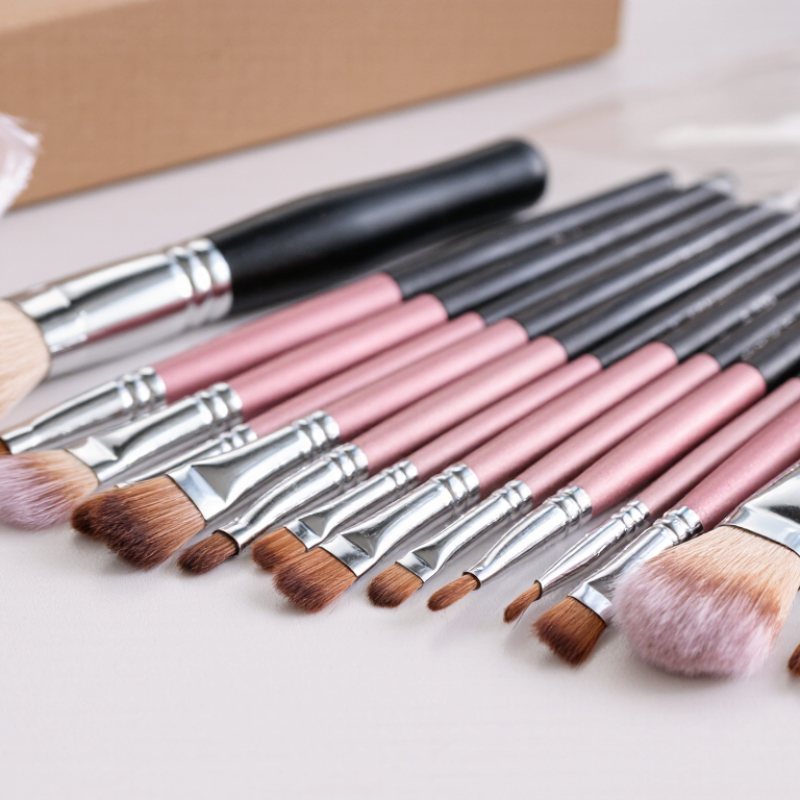
A cosmetic brush contract manufacturer produces brushes for another company under a private agreement. Instead of selling only its own products, it turns client specifications into finished tools. Specifications may include bristle type, ferrule material, handle shape, dimensions, packaging, and target use.
The work starts with technical discussion and sample development. An experienced team checks bristle softness, shedding, trim symmetry, glue strength, and handle balance. A prototype may look attractive but still feel unstable during application. That detail matters. Production teams prepare approved samples, control incoming materials, monitor assembly, and inspect finished batches. Clear records make defects easier to trace.
A capable partner should understand material documentation, factory hygiene, labeling needs, and applicable market requirements. It should explain limitations instead of promising perfect results. The process is not flawless. A color can shift between batches, or a ferrule may sit slightly off-center. Honest inspection reports and corrective action are more useful than polished claims. Buyers should review sampling methods, tolerance limits, lead times, minimum order quantities, and communication procedures before signing. Factory visits or video audits can reveal practical details, such as clean storage areas and organized inspection tables. A signed specification should define acceptable defects, testing methods, and approval responsibilities.
China Best Cosmetic Brush Contract Manufacturer?
Choosing a China-based cosmetic brush manufacturer requires more than comparing prices or polished factory photos. Request a physical sample set, then inspect each brush under bright light. Check bristle softness, shedding, odor, ferrule alignment, handle balance, and glue marks. A reliable supplier should explain materials clearly and provide consistent specifications.
Ask how the factory controls production from incoming materials to final packing. Look for written inspection standards, batch records, trained quality personnel, and traceable corrective actions. Request relevant material safety documents and testing records for fibers, coatings, adhesives, and packaging. If possible, arrange a live video audit or an independent factory inspection. Ask twice.
Contract manufacturing also depends on communication. Confirm minimum order quantities, sample approval procedures, tooling ownership, lead times, payment terms, packaging details, and defect handling in writing. A capable technical team should identify risks before mass production, not after shipment. However, no supplier is perfect. An attractive sample may hide uneven production between batches. I would test repeated samples from different production dates and use real application trials, not only visual checks. That extra step can reveal shedding, poor powder pickup, or uncomfortable handles before a larger commitment. Be willing to revise your specifications after testing. Good evaluation is practical, documented, and sometimes slower than expected.
| Evaluation Dimension | Recommended Weight | What to Evaluate | Practical Benchmark | Evidence to Request | Suggested Score |
|---|---|---|---|---|---|
| Manufacturing Capability | 15% | In-house control of bristle forming, ferrule assembly, handle finishing, filling, inspection, and packing. | Critical processes should be controlled in-house or through documented, qualified subcontractors. | Factory video or audit, process-flow chart, equipment list, production photographs, and subcontractor controls. | 0–5 |
| Quality Management System | 15% | Documented procedures for incoming inspection, in-process checks, final inspection, nonconforming products, and corrective actions. | A documented quality system with controlled records and traceable corrective-action reports. | Valid ISO 9001 certificate, quality manual index, inspection forms, CAPA records, and internal-audit schedule. | 0–5 |
| Material Traceability | 12% | Traceability of synthetic or natural bristles, wood or plastic handles, aluminum or steel ferrules, adhesives, coatings, and packaging materials. | Each production batch should be linked to supplier, lot number, inspection result, and finished-goods record. | Bill of materials, supplier declarations, batch records, certificates of analysis where applicable, and material safety documentation. | 0–5 |
| Product Safety and Chemical Compliance | 15% | Potential exposure to restricted substances in coatings, adhesives, plastics, metals, inks, and packaging. | Materials should meet the legal requirements of the intended sales markets; EU-bound products should be assessed against applicable REACH restrictions. | Recent third-party test reports, supplier declarations, restricted-substance list, and market-specific compliance statement. A blanket “FDA-approved brush” claim should not be accepted without a specific legal basis. | 0–5 |
| Bristle Performance | 12% | Softness, spring-back, shape retention, shedding, odor, fiber uniformity, dye stability, and suitability for powder, cream, or liquid formulas. | No visible shedding, sharp fibers, persistent chemical odor, uneven trimming, or unacceptable shape deformation after defined use testing. | Approved golden sample, performance test method, wash or rub test results, and retained samples from production batches. | 0–5 |
| Assembly Strength and Durability | 10% | Bonding between bristle bundle, ferrule, and handle; resistance to pulling, twisting, repeated washing, and normal consumer use. | The supplier should define acceptance criteria and use a repeatable pull, torque, wash, or aging test appropriate to the product design. | Written test procedures, test records, adhesive specifications, curing parameters, and failure-analysis reports. | 0–5 |
| Inspection and Sampling Controls | 10% | Inspection of dimensions, color, logo placement, surface finish, bristle shape, assembly, cleanliness, packaging, and carton quantity. | Use a documented sampling plan, such as ISO 2859-1, with agreed critical, major, and minor defect limits. | Quality-control plan, inspection checklist, defect classification, AQL level, inspection report, and pre-shipment inspection procedure. | 0–5 |
| Sampling and Product Development | 8% | Ability to convert drawings or reference samples into controlled prototypes and production-ready specifications. | A written approval process should cover prototype, engineering sample, pre-production sample, and final production sample. | Sample timeline, revision history, technical drawings, approved-sample procedure, and sample-to-bulk consistency records. | 0–5 |
| Capacity and Supply Reliability | 6% | Monthly production capacity, available shifts, critical equipment, raw-material security, and ability to handle seasonal demand. | Capacity claims should be supported by production records and should include realistic allowance for quality inspection and maintenance. | Capacity plan, equipment utilization data, production schedule, inventory policy, and business-continuity plan. | 0–5 |
| Commercial Terms and Total Cost | 4% | MOQ, tooling, sampling charges, packaging, payment terms, shipping terms, inspection costs, and potential rework or replacement costs. | Compare total landed cost and risk, not only the quoted unit price. | Itemized quotation, tooling ownership terms, Incoterms, payment schedule, warranty terms, and defect-replacement policy. | 0–5 |
| Communication and Documentation | 3% | Response speed, technical understanding, English documentation, change control, complaint handling, and transparency during audits. | Important specifications and changes should be confirmed in writing with version-controlled documents. | Meeting records, technical data sheets, change-notification procedure, complaint log, and corrective-action response time. | 0–5 |
| Total Evaluation Weight | 100% | Prioritize documented capability, repeatable quality controls, material traceability, and compliance evidence over marketing claims. | |||
China Best Cosmetic Brush Contract Manufacturer? Key Manufacturing Services and Customization Options
A capable Chinese contract manufacturer should offer more than low unit pricing. McKinsey reported that the global beauty market may grow about 6% annually through 2027. That growth increases demand for reliable, customizable brush production. Services often include concept development, material selection, prototype sampling, molding, assembly, packaging, and final inspection. Experienced teams can recommend synthetic fibers, natural materials, aluminum ferrules, wooden handles, or recycled plastics. Each choice affects softness, durability, shedding, and cost.
Customization should be measurable. Buyers can request handle shapes, ferrule finishes, fiber density, brush sizes, color matching, engraved logos, and retail packaging. A professional factory should provide sample approval records and batch traceability. Quality checks may include pull testing, visual inspection, odor assessment, and packaging verification. ISO 9001-based procedures can improve consistency, although certification alone does not guarantee excellent brushes. Factory audits still matter. I learned this the hard way. A beautiful sample can hide weak mass production.
Tips: Ask for three production samples. Compare shedding after repeated washing. Confirm minimum order quantities, lead times, inspection standards, and replacement terms before signing. Request test photos and written specifications. Smaller orders may receive less attention. That point deserves honest discussion. Suppliers should also explain whether tooling, packaging, and revisions create additional charges. Clear communication prevents expensive surprises.
The chart summarizes common customization areas offered by cosmetic brush contract manufacturers. A score of 1 indicates that the service is commonly available in private-label or OEM production, while 0 indicates that it is not a standard requirement for every project. Actual availability depends on the product specification, order quantity, materials, and packaging requirements.
Choosing a China-based cosmetic brush contract manufacturer requires more than comparing factory prices. The real test is consistent quality from sample approval to final packing. In practical audits, I look for documented incoming inspection, batch records, and trained line operators. Small details matter. A ferrule should sit evenly, adhesive should not bleed, and bristles should feel consistent across the set.
Material control deserves equal attention. Synthetic fibers should have stable softness, shape retention, and low shedding after repeated washing. Aluminum ferrules need uniform thickness and clean edges. Handles may use bamboo, wood, or ABS, but each option requires clear specifications and surface testing. Reliable manufacturers can provide material declarations, supplier records, and restricted-substance screening. These documents reduce uncertainty, although paperwork alone cannot replace physical inspection.
Production control becomes visible during pilot runs. I prefer factories that separate approved samples from active production references. Operators should check glue curing, ferrule alignment, handle coating, and logo placement at defined intervals. AQL sampling, drop testing, pull testing, and brush-wash testing can reveal problems before shipment. I have seen attractive samples fail during mass production because humidity changed adhesive performance. That risk is easy to underestimate. No factory is perfect, including one with impressive equipment. A useful partner accepts corrective actions, records repeated defects, and explains delays honestly. My own inspection process still needs refinement, especially when color variation appears under different lighting.
Choosing the right contract manufacturing partner requires more than comparing quotations. McKinsey’s 2023 beauty report estimates that the global beauty market may reach about $580 billion by 2027. This growth increases pressure on quality, speed, and product consistency. A capable Chinese manufacturer should explain bristle selection, ferrule attachment, handle finishing, and batch inspection in practical terms. Ask for production samples, not only polished catalog photos. Check whether the factory can repeat the same softness after washing, packing, and shipment.
Review documented systems before discussing volume. ISO 22716-based cosmetic good manufacturing practices can support stronger hygiene and traceability controls. Request records for incoming materials, in-process inspections, and final sampling. The supplier should also disclose minimum order quantities, tooling ownership, lead times, and failure-handling procedures. A low price can hide unstable bristles or weak glue. That is not a saving.
Tips: Send one detailed specification sheet. Include brush shape, fiber length, handle coating, logo position, packaging, and acceptable defects. Test samples under real use for at least several days. Ask for factory audit evidence and recent quality records. Independent laboratory checks may be sensible for coatings and material safety. Do not rely on one successful sample; production variation remains a real risk. Some buyers overlook communication speed, yet unclear approvals often create expensive rework. Reflect honestly: the cheapest partner may be the least predictable.
It produces brushes for another company under an agreed specification. Specifications may cover fibers, handles, ferrules, sizes, packaging, and intended use.
The manufacturer creates samples and checks softness, shedding, symmetry, glue strength, and balance. A pretty sample may still feel unstable.
Options may include synthetic fibers, natural fibers, aluminum ferrules, wooden handles, and recycled plastic. Each choice affects softness, durability, shedding, and cost.
Request production samples, not only catalog photos. Test shedding after repeated washing and inspect handle alignment, odor, packaging, and fiber trimming.
Ask for incoming material records, inspection results, sample approvals, and batch traceability. Clear records help locate defects when something goes wrong.
Include fiber length, brush shape, handle coating, logo position, packaging, and acceptable defects. Also define testing methods and approval responsibilities.
Smaller orders may receive less production attention. Confirm quantities, tooling charges, revision costs, lead times, and replacement terms before signing.
Not always. A low price may hide weak glue, uneven fibers, or unstable mass production. The cheapest option can become the least predictable.
Yes, when practical. A visit or video audit can reveal clean storage, organized inspection tables, and real working conditions.
Yes. Colors may shift, and ferrules may sit slightly off-center. Honest inspection reports and corrective action are more useful than perfect promises.
Choosing the right China-based cosmetic brush contract manufacturer requires more than comparing prices. Cosmetic Brush Contract Manufacturing involves a complete partnership, from product design and material selection to sampling, mass production, packaging, and delivery. A reliable manufacturer should offer flexible customization, including brush shape, handle design, fiber type, ferrule finish, logo application, and packaging solutions. Clear communication, transparent quotations, realistic lead times, and responsive project management are also essential for a smooth cooperation.
Before making a decision, buyers should evaluate the manufacturer’s production capabilities, experience with customized orders, quality control procedures, and ability to maintain consistent results across large quantities. Attention should be given to material safety, fiber softness, durability, shedding resistance, assembly quality, and inspection standards. Reviewing samples, factory information, testing procedures, and production controls can help reduce risks. The ideal partner combines technical expertise, dependable quality, scalable capacity, customization flexibility, and professional service to support long-term product development and stable supply.