Choosing a Makeup Brush OEM Manufacturing partner in 2026 requires more than comparing unit prices. The global beauty industry is moving quickly. McKinsey’s 2023 beauty report projected the market could approach $580 billion by 2027. Circana also reported a 14% increase in U.S. prestige makeup sales during 2023. These figures suggest stronger demand, but they also raise buyer expectations for consistency, safety, and design quality.
Performance matters.
Rae Morris, professional makeup artist and brush designer, has said, “A brush is an extension of your hand.” That idea should guide OEM evaluation. A factory must understand ferrule balance, filament softness, shedding resistance, handle ergonomics, and repeatable assembly. Ask for production samples, not only digital catalogs. Test the brush after washing, drying, pressing, and daily use. Examine the glue line closely. Small defects become expensive returns.
This guide explains how to assess a manufacturer’s experience, technical controls, materials, sampling process, minimum order quantities, and communication habits. Certifications can support credibility, but they cannot replace factory audits or independent testing. A polished website proves little. Neither does the lowest quotation. No supplier is flawless. Even experienced manufacturers may miss a color variation or packaging detail. That is why clear specifications, signed approvals, inspection checkpoints, and realistic timelines matter. The right partner should improve the product, not simply produce it. It should also admit limitations before they become problems.
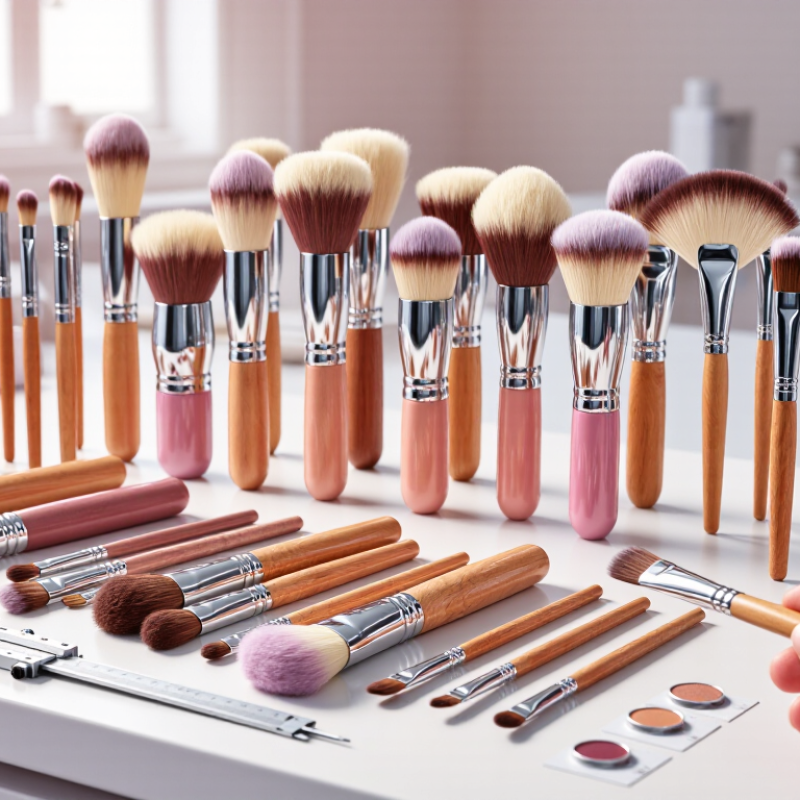
Choosing a makeup brush OEM manufacturer in 2026 starts with a precise OEM brief. Define the brush types before requesting prices: foundation, concealer, powder, blush, eyeshadow, and detail brushes need different shapes and densities. Include target dimensions, handle finish, ferrule color, logo method, and packaging requirements. Small details affect sampling time and final cost.
Material choices deserve practical testing. Synthetic fibers offer consistent performance and easier cleaning, while natural fibers may provide a different pickup and softness. Ask for fiber diameter, shedding results, odor control, and repeated-wash testing. During factory evaluations, request samples from several production batches. One attractive sample proves little. I learned this the hard way.
Set MOQ targets by SKU, not only by total order. A factory may accept 3,000 pieces overall but require 500 pieces for each color or handle design. For 2026 planning, create three cost targets: sample development, pilot production, and volume production. A realistic mid-range brush may require different pricing at 1,000, 5,000, and 20,000 pieces. Confirm whether molds, testing, packaging, and freight are included. Costs change quickly.
Leave room for revision. Your first specification may be incomplete. Ask the manufacturer to identify production risks, not merely confirm every request. A reliable partner should explain trade-offs clearly, document tolerances, and provide inspection records before shipment. That evidence matters more than a polished presentation.
Factory capacity should match your launch plan, not just impress during a video tour. Ask for monthly output, active production lines, staffing levels, and recent utilization records. A factory claiming high capacity may still delay smaller orders during peak seasons.
Lead times need written detail. Request separate timelines for sampling, raw material purchasing, production, inspection, and packaging. In my experience, unclear approval steps create more delays than manufacturing itself. Ask what happens when a handle color, ferrule finish, or bristle shape fails inspection. Get the answer before signing.
MOQ affects both cash flow and quality control. A low MOQ can support testing, but it may increase unit costs or limit material choices. A high MOQ can leave unsold inventory in storage. Compare three order scenarios and calculate the cost per usable brush, not only the quoted price. Small details matter.
Defect-rate records deserve careful checking. Request data from recent comparable orders, including shedding, loose ferrules, uneven trimming, odor, and packaging damage. Do not accept one attractive monthly percentage without the inspection method. Review sample reports, rework records, and corrective-action evidence. I once treated a supplier’s defect rate as complete proof. That was too optimistic. Independent pre-shipment inspection remains useful, especially for a first order. A factory that shares problems clearly may be more dependable than one promising perfection.
In 2026, choosing a makeup brush OEM manufacturer requires more than checking samples and factory photos. Audit its quality system against ISO 22716:2007, which covers cosmetic good manufacturing practices. The standard helps assess hygiene, personnel training, production controls, storage, and documented procedures. Ask for controlled documents, training records, cleaning schedules, and recent internal audit findings. Do not guess.
Traceability should connect every brush to its materials, production date, operators, inspection results, and shipment record. During an audit, select one finished brush and trace it backward to the ferrule, handle, adhesive, and bristles. Then trace the same batch forward to its packing and delivery documents. The process should be quick and legible. If records sit in separate spreadsheets, risk increases. A missing lot code may seem minor, yet it can delay an investigation or widen a product hold.
Inspect how the manufacturer handles defects, complaints, changes, and supplier approvals. Request a sample deviation report, not only a polished procedure. Look for root-cause analysis, corrective actions, responsible staff, and completion dates. A factory may follow ISO 22716 principles without holding formal certification, so verify the actual controls on site. Walk through production areas. Check labeled containers, covered components, clean worktables, and restricted access. Photos can hide routine weaknesses. One imperfect record is not automatic rejection, but repeated gaps deserve a slower decision and stronger contractual controls.
Choosing a Makeup Brush OEM Manufacturer in 2026 requires more than checking product samples. Ask how the factory verifies EU 1223/2009 requirements when supplying cosmetic products or related kits. A responsible EU partner should support safety documentation, ingredient records, and a clear Responsible Person process where applicable. For standalone brushes, confirm which rules apply to the handle, adhesive, coatings, and packaging.
FDA MoCRA 2022 also deserves careful review. Request evidence of facility registration, product listing support, safety substantiation, and serious adverse event procedures when cosmetics are included. Do not accept vague claims such as “FDA approved.” Cosmetics are not generally pre-approved in the same way as medicines. Under REACH, the manufacturer should screen materials for restricted chemicals and SVHCs. Ask for current declarations, laboratory reports, and supplier traceability. Old reports may no longer reflect current materials.
Tips: Request batch records, test methods, and corrective-action reports before signing. Check CPSIA requirements if brushes are designed or marketed for children. Age grading, tracking information, and third-party testing may apply. Visit the production site if possible. Watch the adhesive station and packaging storage areas. They reveal practical control. A polished compliance file can still hide weak supplier controls. I would also compare documents against actual samples, because paperwork sometimes describes an earlier formula or handle material. Keep every approval, revision, and test result in one controlled file.
When choosing a makeup brush OEM manufacturer in 2026, ask for evidence behind every sustainability claim. An FSC logo alone proves little. Request the certificate number, product scope, certificate holder, and chain-of-custody status. FSC reported more than 160 million certified forest hectares globally in 2023, but certification does not automatically cover every paper component. Confirm whether the handle carton, sleeve, insert, and shipping case are included.
Recycled content also needs precise measurement. Ask for post-consumer and pre-consumer percentages separately, supported by supplier declarations or third-party records. ISO 14021 guidance helps distinguish verified recycled content from vague “green” language. The OECD’s Global Plastics Outlook reported that only 9% of global plastic waste was ultimately recycled in 2019. That figure should make buyers cautious about recycled-plastic claims. Packaging metrics should include total weight, material breakdown, recycled percentage, and disposal instructions. The Ellen MacArthur Foundation’s 2023 Global Commitment report showed that reducing virgin plastic remains difficult across major packaging systems. Less packaging is often more credible than decorative sustainability messaging.
In factory reviews, compare the same brush across three packaging versions. Measure grams, empty space, and transport cartons. Keep the data.
One weakness remains. Suppliers may provide impressive certificates but incomplete product-level records. I would record this uncertainty, request corrective evidence, and avoid approving claims until the numbers match the actual shipment.
Evaluate sustainability data through verifiable FSC claims, recycled-content documentation, and packaging recycling performance.
The chart shows EU packaging recycling targets for 2025 and 2030 by material, providing a practical benchmark for reviewing an OEM supplier’s packaging plan. For FSC documentation, FSC Mix products contain at least 70% FSC-certified and/or post-consumer reclaimed material, while FSC Recycled products are made from 100% recycled material. Ask suppliers to provide certification scope, recycled-content percentages, packaging weight by material, and documented recycling or recovery data.
Reference basis: EU Packaging and Packaging Waste Directive 94/62/EC recycling targets; FSC trademark and chain-of-custody material requirements.
Define brush types, dimensions, handle finish, ferrule color, logo method, and packaging requirements. Small details change cost and sampling time.
Synthetic fibers usually clean easily and perform consistently. Natural fibers may feel softer. Test pickup, shedding, odor, and repeated washing.
Request samples from several production batches. One beautiful sample proves little. Check trimming, softness, ferrule security, odor, and loose fibers.
Set targets by individual product code, not only total quantity. A total order may still require separate quantities for each color or handle design.
Create separate targets for sampling, pilot production, and volume production. Compare prices at 1,000, 5,000, and 20,000 pieces.
Ask about monthly output, active lines, staffing, and recent utilization. High capacity can still mean delays during busy seasons.
Request separate timelines for sampling, material purchasing, production, inspection, and packaging. Confirm approval steps and failure-handling procedures in writing.
Request recent records covering shedding, loose ferrules, uneven trimming, odor, and packaging damage. Check inspection methods, rework records, and corrective actions.
Request current material declarations, laboratory reports, batch records, safety documents, and supplier traceability. Match paperwork with actual samples.
Yes, especially for an unfamiliar factory. Inspect before shipment. A polished presentation is not proof of stable production. I learned that late.
Choosing a reliable partner for Makeup Brush OEM Manufacturing in 2026 requires a structured, evidence-based evaluation. Start by defining your OEM brief, including brush types, fiber and handle materials, target quantities, packaging needs, and realistic cost objectives. Then compare manufacturers by production capacity, lead times, minimum order quantities, quality performance, and documented defect-rate history. Clear communication about specifications, sampling, approvals, and change control can help prevent delays and costly revisions.
A qualified manufacturer should also demonstrate a documented quality system aligned with ISO 22716:2007 principles, supported by batch records, material traceability, inspection procedures, and corrective-action processes. Confirm whether the products and packaging can support applicable requirements under EU Regulation 1223/2009, FDA MoCRA 2022, REACH, and CPSIA. Finally, assess sustainability with verifiable FSC claims, recycled-content data, packaging specifications, and measurable waste or material-reduction targets. A transparent supplier that provides reliable documentation, consistent quality, and realistic sustainability evidence is better positioned for long-term cooperation.