Wholesale Makeup Brushes can help retailers, salons, beauty schools, and online stores build a consistent product range. Yet buying in bulk involves more than choosing attractive handles. Brush shape, fiber softness, ferrule strength, packaging, and minimum order quantity all affect the final value.
A reliable buyer should examine samples before placing a large order. Test several brushes on the hand and face. Check whether the bristles shed after gentle washing. Look for uneven trimming, loose ferrules, strong chemical odors, and rough handles. Small flaws matter. Customers notice them quickly.
Supplier verification is equally important. Review business records, product specifications, factory photos, sample policies, and communication quality. Ask how materials are sourced and how products are inspected. Request clear pricing, production timelines, packaging details, and shipping terms. Do not rely only on polished catalog images. They may hide practical weaknesses.
A thoughtful purchasing plan also considers hygiene and storage. Brushes should arrive clean, dry, sealed, and protected from dust. Retail packaging must support safe handling and accurate product information. Regional labeling and consumer-safety requirements should be checked before selling. Requirements vary.
Price is not the whole story. A cheaper brush may create more returns, complaints, and wasted inventory. However, higher prices do not automatically prove better quality. That assumption deserves questioning. Comparing samples, supplier reliability, total landed cost, and customer expectations creates a more balanced decision. This guide explains what wholesale makeup brushes are, how they are evaluated, and how buyers can purchase them with fewer avoidable mistakes.
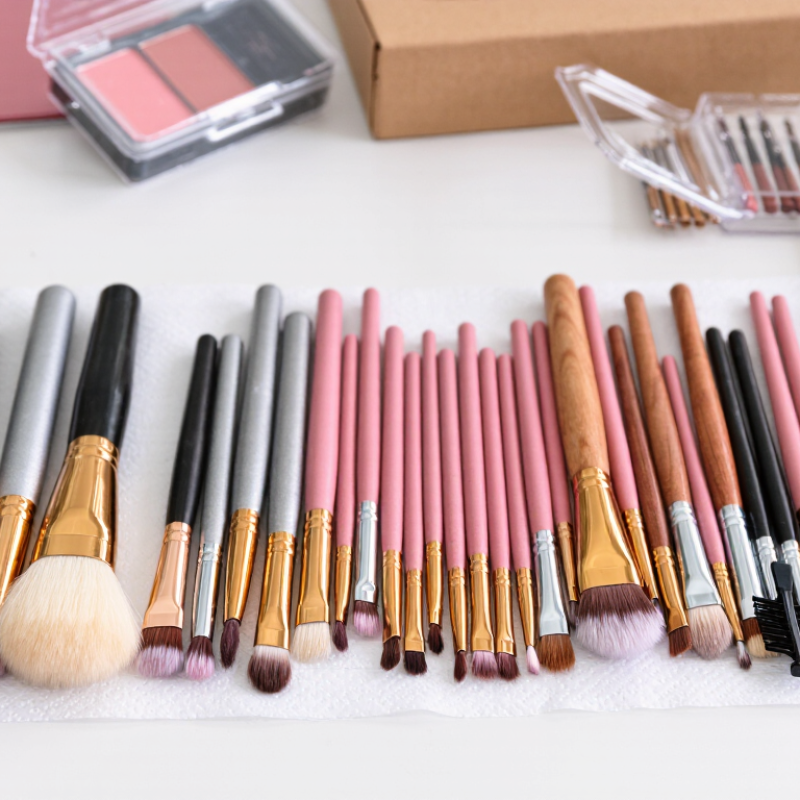
Wholesale makeup brushes are cosmetic tools sold in larger quantities to retailers, salons, artists, or kit makers. They may include face, eye, lip, and blending brushes in coordinated sets. Unlike a single retail purchase, wholesale orders focus on unit cost, consistent supply, and repeatable quality. A professional buyer examines the handle, ferrule, bristles, and packaging before discussing price. Synthetic fibers are common because they are easy to clean and suit liquid or cream products. Natural hair can feel different, but its sourcing and care require closer attention. The brush should not shed during gentle use. It should also keep its shape after washing.
Buying wholesale is not simply ordering the cheapest carton. Ask for samples, material specifications, and a clear quantity schedule. Test several pieces from the same batch. Bend the bristles lightly, inspect loose glue, and check whether the handle feels balanced. Clean the sample according to its intended use. Then watch for shedding, odor, color bleeding, or slow drying. Small details matter. I have learned that an attractive sample does not guarantee uniform production. That assumption needs checking. Request production photos or inspection records when available, and confirm replacement terms for defective units. Consider storage, shipping protection, and local labeling requirements before placing a larger order. A practical wholesale choice should fit the user’s technique, cleaning routine, and expected sales volume.
Wholesale makeup brushes are brushes purchased in larger quantities for resale, professional use, makeup studios, beauty schools, or custom cosmetic kits. A balanced 12-piece assortment commonly combines face, eye, and detail brushes.
This chart shows a practical brush mix for a typical 12-piece wholesale assortment. Eye brushes usually make up the largest share because they support several application and blending techniques.
Wholesale makeup brushes are classified by purpose, construction, fiber, and selling format. The most practical division begins with use: face brushes, eye brushes, lip brushes, and multi-purpose tools. Face brushes usually have larger heads for foundation, powder, blush, or contour. Eye brushes are smaller, with angled, rounded, or tapered shapes for controlled placement. Lip brushes remain compact and firm, helping users create cleaner edges.
Material creates another important category. Synthetic fibers suit liquid and cream products because they resist absorption and clean easily. Natural fibers often feel softer and hold powder well, although quality can vary. Handles may use wood, plastic, or recycled materials, while ferrules can be aluminum or steel. For wholesale buyers, these details affect durability, packaging weight, minimum order quantities, and product positioning. The classification is not always clean. A dense synthetic brush can serve both cream blush and powder.
Wholesale lines are also grouped as individual brushes, coordinated sets, travel kits, or professional assortments. Grand View Research has reported continued growth in the global cosmetics tools market, supported by online beauty retail and at-home application. McKinsey’s beauty industry research projects the global beauty market could approach 590 billion dollars by 2028, suggesting broader demand for accessible application tools. These figures describe the wider market, not brushes alone. I would not treat them as exact purchasing forecasts. Buyers should compare fiber shedding, ferrule alignment, handle balance, wash testing, and sample consistency before ordering large quantities. A beautiful catalog image can hide uneven trimming.
Wholesale makeup brushes are priced by more than appearance. Grand View Research estimated the global makeup brushes market at approximately US$1.5 billion in 2023, with annual growth above 6% through 2030. This demand increases pressure on suppliers to balance quality, speed, and margin.
Bristle material is the first quality signal. Synthetic fibers usually offer consistent shape, easy cleaning, and predictable batch production. Natural hair can feel softer, but its performance may vary. Density also matters. A tightly packed brush spreads foundation evenly, while loose fibers create streaks. Check the cut, spring, ferrule alignment, handle finish, and shedding after repeated washing. The ISO 22716 cosmetics GMP framework emphasizes controlled production and traceability, although it does not certify brush softness or durability. That distinction is easy to miss. Price also reflects labor, packaging, inspection, customization, shipping, and minimum order quantity. A low factory quote may become expensive after defects and returns.
Tips: Request samples from different production batches. Wash each sample at least ten times. Photograph loose fibers and damaged glue. Ask for material specifications, inspection records, and a clear defect policy. Compare landed cost, not unit price. In my experience, a slightly higher price often buys better consistency, but not always. Some premium-looking handles still hide weak ferrules. Test before scaling.
A practical comparison of brush types, construction features, quality indicators, and typical wholesale pricing factors.
| Brush Category | Common Application | Recommended Fiber | Quality Indicators | Typical Wholesale Price Range | Main Price Drivers | Buying Checkpoints |
|---|---|---|---|---|---|---|
| Foundation Brush | Liquid, cream, and stick foundation | Soft synthetic fibers with a flat, rounded, or buffing shape | Even fiber alignment, controlled flexibility, smooth blending, and minimal shedding | US$0.80–US$4.50 | Fiber grade, bristle density, handle finish, ferrule material, and order volume | Test for streaking, odor, shedding, and resistance to repeated washing |
| Powder Brush | Loose powder, pressed powder, and setting powder | Soft, tapered synthetic or natural hair | High softness, balanced pickup, consistent shape, and a full but lightweight profile | US$1.00–US$5.50 | Fiber softness, hair length, knot size, shaping process, and packaging | Check whether the brush distributes powder without creating visible patches |
| Blush Brush | Powder blush, bronzer, and soft contouring | Soft synthetic fibers or carefully selected natural hair | Rounded or angled shape, moderate density, and controlled color payoff | US$0.90–US$4.80 | Fiber type, shape precision, density, ferrule quality, and finishing labor | Evaluate blending, symmetry, softness, and color buildup during use |
| Contour Brush | Powder or cream contouring and facial sculpting | Firm synthetic fibers with an angled or tapered profile | Stable edge, moderate flexibility, secure ferrule, and precise placement | US$1.00–US$5.00 | Shape accuracy, fiber stiffness, density, and hand-finishing requirements | Check whether the edge remains defined after washing and drying |
| Highlighter Brush | Powder, cream, or liquid highlighter | Fine, soft synthetic fibers with a tapered or fan shape | Lightweight pickup, smooth laydown, and no sharp or scratchy tips | US$0.80–US$4.00 | Fiber fineness, tip arrangement, brush size, and decorative components | Test for an even glow rather than concentrated streaks |
| Eyeshadow Shader Brush | Packing powder or cream eyeshadow onto the eyelid | Dense synthetic fibers or flat natural hair | Compact, symmetrical head, firm control, and clean pigment placement | US$0.50–US$3.00 | Fiber density, head size, ferrule precision, and handle construction | Inspect the head for gaps, uneven edges, and loose fibers |
| Blending Brush | Softening eyeshadow edges and creating transitions | Long, flexible synthetic fibers or soft natural hair | Tapered shape, flexible movement, uniform tip length, and gentle touch | US$0.60–US$3.50 | Fiber fineness, tapering accuracy, density, and manual shaping | Check blending performance and whether the shape returns after use |
| Eyeliner Brush | Gel, liquid, or cake eyeliner application | Fine synthetic fibers with a pointed, angled, or flat tip | Sharp point, stable tip, controlled flexibility, and precise alignment | US$0.30–US$2.00 | Tip precision, fiber thickness, ferrule accuracy, and quality control | Draw continuous lines and inspect for split or uneven tips |
| Brow Brush | Brow powder, pomade, gel, and detail work | Firm synthetic fibers, usually angled and thin | Crisp edge, stable angle, firm resistance, and consistent width | US$0.35–US$2.20 | Fiber firmness, tip trimming, ferrule construction, and spoolie attachment | Confirm that the brush can create both fine hair-like strokes and broad fills |
| Lip Brush | Lipstick, lip gloss, concealer, and lip liner blending | Firm yet flexible synthetic fibers | Defined edge, smooth point, compact head, and resistance to product buildup | US$0.40–US$2.50 | Tip formation, fiber quality, retractable mechanism, and handle material | Test precision around the lip line and ease of cleaning |
| Dual-Fiber Brush | Sheer foundation, blush, bronzer, and blended textures | Two lengths or types of synthetic fibers | Layered fibers, balanced density, soft finish, and secure integration | US$1.50–US$7.00 | Complex fiber arrangement, additional assembly time, and higher material usage | Check whether the two fiber layers remain stable after washing |
| Travel Brush Set | Portable daily makeup application | Synthetic fibers with compact handles or protective caps | Consistent quality across the set, secure case, and practical brush selection | US$3.00–US$18.00 per set | Number of pieces, case material, decoration, assembly, and packaging | Review set completeness, case durability, and individual brush performance |
Softness, resilience, tapering, consistency, and shedding resistance strongly affect performance and cost.
Ferrule security, adhesive strength, handle balance, and surface finishing influence durability.
Larger quantities commonly reduce the unit price, while small orders may include setup or sampling costs.
Custom colors, engraved handles, special shapes, packaging, and inserts can increase tooling and production costs.
Before placing a bulk order, test shedding, odor, wash durability, shape retention, color transfer, and handle strength.
Calculate product price together with packaging, inspection, shipping, duties, taxes, and possible defect replacement costs.
Choosing the right wholesale makeup brush supplier requires more than comparing prices. McKinsey’s 2023 beauty report projects the global beauty market could reach nearly $590 billion by 2028. Demand is expanding. Quality expectations are rising faster.
Request samples before placing a large order. Check bristle shedding, ferrule alignment, handle balance, and odor after washing. Ask for material specifications, production photos, inspection records, and packaging details. A reliable supplier should explain their quality-control process clearly. They should also provide consistent batch standards. One sample is not enough.
Review production capacity, lead times, minimum order quantities, and replacement policies. Independent testing can verify durability and material safety. For packaging, ASTM D4169 testing may help assess shipping performance. Suppliers should understand applicable market rules, including chemical restrictions and labeling duties. The exact requirements vary by destination.
Do not choose the lowest quotation automatically. It may hide weaker glue or unstable fibers. A practical scoring sheet can compare quality, communication, compliance, and total cost. My checklist is not perfect. Supplier promises still need evidence. Request a small trial order, inspect every brush, and record defects before scaling up. Look for traceable answers, not polished sales language.
A wholesale makeup brush purchase should begin with a clear product plan. Define brush types, quantities, handle materials, bristle softness, and packaging needs. A balanced set may include foundation, powder, blush, eyeshadow, and angled brushes. Ask suppliers for samples before discussing large orders. Test the brushes on skin, inspect shedding, and wash them several times. Check whether the handles loosen or the ferrules bend. These small details affect customer trust.
Request a written quotation showing unit prices, minimum order quantities, sample fees, production time, shipping terms, and payment conditions. Confirm the exact bristle material and packaging specifications. Product photos are useful, but physical samples provide stronger evidence. Review manufacturing records or quality procedures when available. A supplier should answer clearly and provide consistent documents. If replies remain vague, pause the purchase. A low price is not always a saving. I once overlooked packaging strength in a buying plan; damaged boxes created unnecessary costs.
Tips: Compare at least three quotations. Keep approved samples for future inspections. Use a simple checklist during quality control. Count the bristles, check the glue, and inspect every printed label. Agree on defect standards before production starts. Allow extra time for customs, transport, and rework. Do not rely on promises alone. Written details protect both sides.
They are cosmetic tools sold in larger quantities to retailers, salons, artists, or kit makers. Sets may include face, eye, lip, and blending brushes.
Synthetic fibers are popular because they clean easily and work well with liquid or cream products. Natural hair feels different and needs closer sourcing and care.
Check the handle, ferrule, bristles, glue, balance, and packaging. The brush should not shed during gentle use. It should keep its shape after washing.
Samples reveal details that photographs cannot show. Bend the bristles lightly, wash the brush, and check for odor, bleeding, slow drying, or loose parts.Test it twice.
Test several pieces from the same batch. Compare softness, shape, handle balance, glue, and printed labels. An attractive sample does not guarantee uniform production.That assumption needs checking.
It should show unit prices, minimum order quantities, sample fees, production time, shipping terms, payment conditions, and packaging specifications.
Compare at least three quotations and request clear material information. Review production photos or inspection records when available. Vague replies deserve caution.Low price is not always savings.
Agree on defect standards before production starts. Confirm replacement terms for defective units. Check packaging strength, shipping protection, storage needs, and transport time.Boxes can arrive damaged.
Do not rely on promises alone. Keep approved samples for later inspections, use a checklist, and allow time for transport, rework, and labeling requirements.
Wholesale Makeup Brushes are cosmetic tools purchased in larger quantities, usually for resale, professional use, beauty services, or product kits. They can be classified by application, such as foundation, powder, blush, eyeshadow, concealer, and detail brushes, as well as by shape, fiber type, handle material, and manufacturing method. Brush quality and price depend on factors including the softness and durability of the bristles, fiber density, shedding resistance, ferrule strength, handle construction, finishing standards, order volume, and customization requirements.
To choose the right wholesale supplier, buyers should review product specifications, request samples, evaluate consistency, confirm production capacity, examine quality-control procedures, and communicate clearly about packaging and delivery expectations. A successful Wholesale Makeup Brushes purchase generally includes defining product needs, comparing quotations, checking sample quality, confirming payment and shipping terms, approving final specifications, and conducting an inspection before accepting the order. Careful planning helps buyers balance appearance, performance, cost, and reliable long-term supply.