Private Label Makeup Brushes give beauty brands a practical way to build recognition through a daily-use product. A brush touches the customer’s hand, face, and routine. Its weight, softness, ferrule strength, and cleaning performance can influence repeat purchase decisions.
The opportunity is supported by broader beauty-market evidence. McKinsey’s The Beauty Market in 2023 report projects the global beauty industry could approach $580 billion by 2027, with continued growth across makeup and related categories. Circana’s 2023 U.S. prestige beauty review also reported strong, double-digit growth in prestige makeup sales. These figures do not guarantee success for every brush launch. They show a market willing to spend when performance feels credible.
Private label can shorten the path from concept to shelf. Brands can select synthetic fibers, handle finishes, ferrule colors, packaging formats, and brush shapes around a defined customer profile. A soft foundation brush may suit beginners, while a dense angled brush may serve experienced artists. NielsenIQ’s private-label research has repeatedly shown that shoppers increasingly judge store brands by quality, not price alone. That shift matters.
But customization is not automatically differentiation. A beautiful handle cannot hide shedding fibers or loose glue. Brands should request samples, test washing cycles, inspect edge consistency, and document supplier specifications. The data is useful, but imperfect. Consumer preference changes quickly, and “professional” claims require evidence. A thoughtful Private Label Makeup Brushes program therefore combines market research, controlled quality checks, and honest product communication. That is where a private-label idea becomes a dependable brand asset.
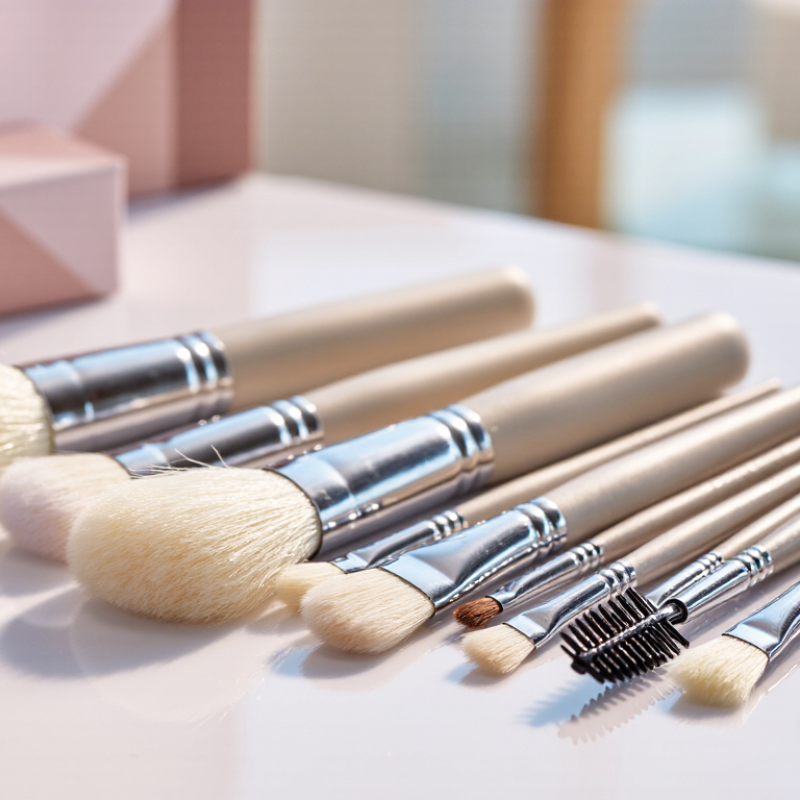
Private label makeup brushes allow beauty brands to sell products made by a specialized manufacturer under their own name. The manufacturer usually manages material sourcing, brush construction, and production. The brand controls the final identity. This may include handle colors, logo placement, brush shapes, packaging, and set sizes.
For beauty brands, private label brushes mean more than adding a logo. They create a physical touchpoint between the product and the customer. A soft, dense brush can make foundation application feel smoother. A balanced handle can improve control during detailed eye makeup. In practice, brands should request samples and test shedding, ferrule strength, odor, and washing performance. Small defects become obvious after repeated use. Quality testing is not glamorous, but it protects customer trust. Some brands focus too heavily on appearance. That can be a mistake.
Tips: Compare several samples before approving production. Check whether bristles remain secure after cleaning. Ask for clear material specifications and production timelines. Keep records of every approved detail. A written standard reduces confusion later. Also, test the brushes with different formulas, including liquid, cream, and powder products. User feedback may reveal problems that factory checks miss. Not every elegant design feels comfortable. Real use decides.
Custom brush design gives a private label makeup line a physical signature. The handle, ferrule, bristle profile, and weight can work together like visual handwriting. A tapered head may create softer cheek application, while dense, short fibers can support controlled coverage. These details help customers recognize a product before reading its label.
McKinsey & Company valued the global beauty market at about $446 billion in 2023. Its industry report also projected roughly 6% annual growth through 2027. That growth increases shelf competition. A distinctive brush can support differentiation through use, not decoration alone. A custom grip with a matte finish may feel secure during application. A measured bristle length can reduce product waste and improve repeatability. Small choices matter.
But custom design is not automatically better. An unusual handle may look memorable yet feel tiring after five minutes. Very soft fibers can feel luxurious, but they may lack control with thicker formulas. This is where practical testing becomes essential. Teams should test prototypes with different hand sizes, application habits, and cleaning routines. Keep the feedback honest. One early concept may fail. That is useful evidence, not wasted effort. Data from consumer testing, supported by product-development records and material specifications, makes the final design more credible. A brush should photograph well, but it must also survive daily use.
Private label makeup brushes give brands control beyond color, packaging, and pricing. Quality decisions begin before sampling. According to Grand View Research, the global cosmetics market was valued at over 446 billion U.S. dollars in 2023. More beauty products mean stronger expectations for safe, consistent application tools.
A controlled brush program should define bristle length, density, softness, ferrule strength, handle coating, and odor limits. Inspectors can record shedding after repeated dry and wet strokes. They should also check loose ferrules, uneven trimming, surface scratches, and color transfer. Small defects spread. ISO’s 2023 Survey reported more than 1.26 million ISO 9001 certificates worldwide, showing how widely documented quality systems are used. However, certification alone cannot prove that every brush performs well.
Private label production allows brands to approve a reference sample and compare each batch against it. Useful records include raw-material checks, line inspections, pull tests, drop tests, and microbial-risk assessments. Packaging should protect clean brush heads from dust and compression.
In practice, suppliers may pass visual inspection while failing durability testing. That gap needs attention. I would also keep retained samples from every production lot, because a complaint may appear weeks after shipment. Testing costs money, but inconsistent bristles can create returns, poor reviews, and lost trust. McKinsey’s beauty market analysis projects continued growth toward approximately 590 billion dollars by 2028, making reliable quality control a commercial requirement, not merely a technical preference.
Private label makeup brushes can improve pricing by reducing development and sourcing layers. A manufacturer may offer ready-made shapes, handles, and fibers for customization. This shortens product development and limits early tooling costs. Your team can focus on quality, packaging, and customer positioning.
The financial case is meaningful. McKinsey & Company projects the global beauty market could reach $590 billion by 2028. Competition will remain intense. Grand View Research also reports steady growth in the global makeup brush market, supported by rising cosmetics use and online purchasing. These trends create demand, but demand alone does not guarantee profit. A lower factory price must still include sampling, freight, duties, packaging, content creation, and returns.
Private label production can support healthier margins through volume planning. A controlled brush set may cost less per unit than several unrelated designs. Standardized ferrules and shared packaging can reduce waste. Small initial orders are safer for testing, though their unit costs may be higher. That trade-off deserves honest review. Product testing should examine shedding, odor, handle balance, and wash durability before scaling. Intertek’s consumer product testing guidance emphasizes performance and safety checks across materials and finished goods. Buyers notice a loose ferrule quickly. They also notice cheap packaging.
Profitability improves when quality stays consistent. Clear specifications, batch inspections, and documented supplier communication reduce expensive surprises. The strongest pricing strategy is not simply “cheaper.” It is predictable cost, reliable performance, and enough perceived value to support a fair retail price.
A private label brush can strengthen product differentiation and improve control over design, quality, and pricing. McKinsey’s 2023 beauty market report projects the global beauty industry could reach about $580 billion by 2027. That growth increases competition. Your supplier choice matters.
Evaluate production quality before discussing a low unit price. Request samples with consistent bristle density, secure ferrules, balanced handles, and clean finishing. Test shedding after repeated washing and examine odor, staining, and handle cracks. Ask for material traceability and documented quality procedures. ISO 9001 or ISO 22716 systems can indicate stronger manufacturing discipline, but certification alone proves little. Review the actual factory records.
Check compliance support, too. A capable supplier should provide relevant material documents, test reports, and packaging specifications for your target markets. Discuss minimum order quantities, sampling fees, lead times, replacement policies, and inspection methods in writing. McKinsey also notes that consumers increasingly value sustainability and product transparency. Recycled materials may help, but vague claims create distrust. Evidence is better.
Do not judge suppliers by samples alone. Production batches can vary. An independent inspection may expose uneven glue, loose bristles, or color differences before shipment. The cheapest quotation can become expensive through returns and delays. I would also question my own assumptions. A beautiful prototype does not guarantee reliable volume production. Small pilot orders offer useful evidence before committing to a larger private label range.
A specialized manufacturer produces the brushes under your brand name. You control handles, logos, shapes, packaging, and set sizes.
You can customize handle colors, logo placement, brush density, shapes, packaging, and the number of brushes per set.
Samples reveal shedding, odor, loose ferrules, poor balance, and uncomfortable handles. A digital design cannot show everything.
Test brushes with liquid, cream, and powder formulas. Wash them repeatedly and check bristle security, odor, handle balance, and ferrule strength.
Ready-made shapes, handles, and fibers can shorten development. They may also reduce early tooling expenses. This is not always the cheapest route.
Include sampling, manufacturing, freight, duties, packaging, content creation, inspections, and returns. Factory pricing alone gives an incomplete picture.
Standardized ferrules and shared packaging may reduce waste. Larger volumes can lower unit costs, but unsold inventory remains a real risk.
Use written specifications, approved samples, batch inspections, and clear production timelines. Consistent performance matters more than attractive packaging alone.
Private Label Makeup Brushes offer beauty brands a practical way to create products that reflect their own identity while maintaining control over design, quality, and market positioning. By selecting brush shapes, materials, colors, handles, and packaging details, brands can develop a distinctive collection that supports a consistent customer experience and stands apart from generic alternatives. Custom brush design also allows products to be tailored to specific makeup techniques, user preferences, and target markets.
Private label manufacturing can strengthen quality control by enabling brands to define material standards, inspect production samples, and establish clear performance requirements. It may also improve pricing and profitability through efficient production, flexible order planning, and more consistent cost management. Before selecting a supplier, brands should evaluate manufacturing experience, customization capabilities, material transparency, quality assurance procedures, communication, production capacity, lead times, and minimum order requirements. A reliable supplier should support both product consistency and long-term business growth.