Industrial Brush Roll Engineering & Manufacturing Whitepaper
A Comprehensive Technical Framework for Procurement Officers, Systems Integrators, and OEM Equipment Manufacturers
In modern continuous manufacturing, automated surface processing, municipal sanitation, and precision material handling, the industrial brush roll functions as an indispensable core component. Whether deployed in continuous steel strip descaling, glass processing lines, printed circuit board (PCB) scrubbing, or municipal road maintenance equipment, the engineering integrity of a brush roll directly dictates machine uptime, yield efficiency, and surface treatment quality.
1. Metallurgy, Polymer Science, and Filament Engineering
The performance of any wholesale industrial brush roll depends on selecting the optimal bristle filament material mated to a structural shaft core. OEM procurement specifications must balance abrasive wear rates, memory recovery, tensile strength, and environmental resistance against operational factors:
| Filament Type | Material Composition | Thermal Limits | Abrasion & Chemical Resistance | Primary Industrial Applications |
|---|---|---|---|---|
| Nylon 6 / 66 / 612 | Polyamide Polymer | Up to 120°C - 150°C | High wear recovery, excellent alkali resistance | Conveyor belt cleaning, glass washing, PCB scrubber rolls |
| Abrasive Nylon Grit | Nylon 612 + Silicon Carbide / Aluminum Oxide | Up to 140°C | Extreme micro-deburring, aggressive oxide layer removal | Hot/cold rolled steel strip polishing, metal edge deburring |
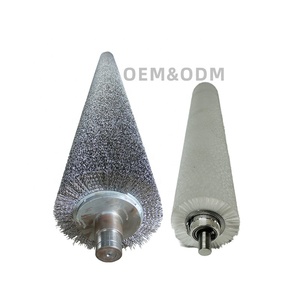
| Stainless Steel Wire | AISI 304 / 316 High-Tensile Steel Wire | Up to 450°C | Maximum mechanical force, severe rust descaling | Heavy foundry descaling, weld cleaning, heavy surface roughening |
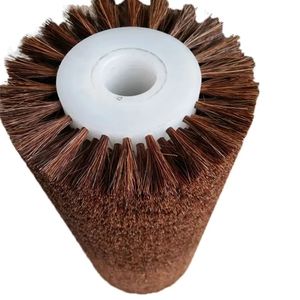
| Natural Horsehair | 100% Pure Natural Tail/Mane Hair | Up to 100°C | Anti-static, ultra-soft scratch-free polishing | Textile finishing, wood panel dust removal, sensitive optics cleaning |
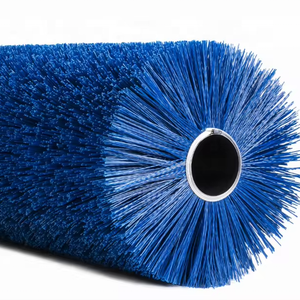
| Polypropylene (PP) | Thermoplastic Polyolefin | Up to 80°C | Superior acid/base resistance, low cost, water hydrophobic | Municipal road sweeping main brooms, agricultural washing rolls |
2. Core Shaft Structural Integrity & Dynamic Balancing
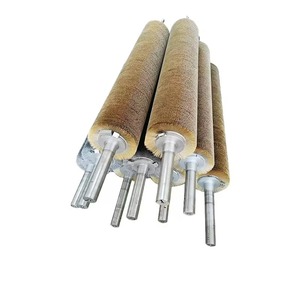
At operational speeds exceeding 1,200 RPM, structural eccentricities within a cylindrical brush roller cause severe machine vibration, premature bearing destruction, and uneven surface processing patterns. Premium Chinese suppliers like our manufacturing enterprise utilize seamless carbon steel, stainless steel, or extruded structural aluminum tubing for shaft construction.
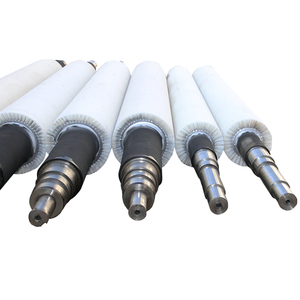
Every precision brush cylinder undergoes computerized dynamic dynamic balancing (ISO 1940 Grade G2.5 / G6.3). By embedding balance weights inside the hollow arbor shaft or precision-machining counter-weight zones, radial runout is kept within 0.05 mm. This dynamic stability extends drive motor lifespan, reduces mechanical wear, and maintains uniform brush pressure across working widths exceeding 4,500 mm.
Staple-Set Tufting
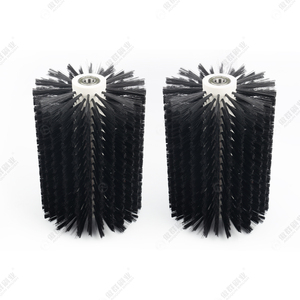
Precision CNC drilling of blind holes into solid plastic cores (POM, Nylon, PP), followed by mechanical anchoring of bristle tufts using stainless steel or brass staple wire. Offers quick customization and versatile fill patterns.
Spiral Wound Strip Channel
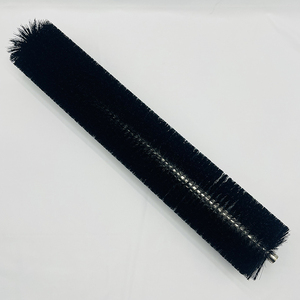
Metal channel strip brushes (galvanized or stainless steel back) wrapped under tension around a heavy-wall metal arbor shaft. Provides ultra-high filament density for heavy continuous duty applications without shedding risk.
Fused & Epoxy-Bonded
Filament bases are embedded into resin matrix cores or thermoplasic fusion layers. Creates a seamless, fully waterproof chemical barrier ideal for sanitary food processing, acidic pickling, and high-moisture environments.
Future Trends in Industrial Brush Roll Manufacturing
How Smart Engineering, Sustainable Materials, and Total Cost of Ownership (TCO) are Reshaping Sourcing Strategies
Smart Wear-Sensing IoT Modules
As Industry 4.0 matures, high-speed automated lines demand real-time visibility into brush wear. Next-generation brush rollers are integrating conductive tracer filaments or embedded RFID micro-sensors into the core matrix. These sensors monitor bristle length loss, core temperature spikes, and vibration anomalies, transmitting predictive maintenance data directly to centralized plant SCADA systems to prevent catastrophic process downtime.
Bio-Based & Recycled Synthetics
Global ESG regulations and corporate carbon neutrality directives are forcing a shift away from virgin petroleum-derived polymers. Leading OEM suppliers are introducing bio-based Polyamide 11/12 filaments derived from castor oil, alongside FSC-certified sustainable timber cores and 100% recycled Polypropylene backing cores. These sustainable variants meet strict EU/US environmental compliance standards without sacrificing mechanical tensile strength.
Nanocomposite & Diamond Grit Coatings
Standard Silicon Carbide (SiC) abrasive filaments are rapidly being upgraded with diamond micro-powder coatings and ceramic nanocomposite matrices. These advanced filaments increase abrasive cutting speed by 35% and extend operational lifespan up to 3x when deburring hardened alloys, titanium sheets, and glass substrates, drastically lowering the overall cost per finished square meter.
Strategic Sourcing Guide: Evaluating a Chinese Brush Roll Manufacturer
When evaluating wholesale brush roll suppliers in China, international buyers must perform comprehensive supplier audits extending beyond basic price per unit. Evaluate manufacturing infrastructure, quality systems, and engineering capabilities using the following criteria:
- Certified Quality Management Systems: Ensure the manufacturing facility operates under audited ISO 9001:2015 (Quality), ISO 14001 (Environmental), and SA8000 (Social Accountability) frameworks.
- Precision CNC Machine Fleet: Verify that tufting and trimming operations utilize multi-axis automated CNC tufting equipment (such as 5-axis German or high-precision domestic machines) to guarantee consistent tuft density and exact trim profiles.
- Custom Core Shaft Machining Capabilities: Check if the supplier performs in-house shaft turning, keyway milling, dynamic balancing, and non-destructive testing (NDT) to prevent shaft shear failure under heavy motor torque.
- Prototyping & OEM Design Support: Look for dedicated engineering departments capable of working from customer STEP/CAD files, performing reverse engineering on sample brushes, and delivering functional prototypes within 7-10 business days.
Industrial Brush Roll Sourcing FAQ
Technical Answers to Frequently Asked Sourcing and Engineering Questions
Why Partner With Us As Your Brush Rolls Supplier
Combining Decades of Brush-Making Heritage with Advanced CNC Automation
Operating across a modern 20,000 square meter manufacturing scale supported by over 300 experienced engineers and technical staff, our factory delivers reliable performance for global buyers. With a production output exceeding 800,000 specialized brushes per month, we support both high-volume OEM equipment builds and complex, low-volume custom industrial replacement orders.
Our end-to-end manufacturing workflow integrates initial CAD engineering consulting, material metallurgy testing, precision shaft machining, multi-axis automated tufting, dynamic balancing, and final quality inspection. By controlling every phase under one certified roof, we guarantee unit-to-unit consistency, fast prototype turnarounds, and competitive factory-direct wholesale pricing.
Request a Custom Engineering Quote & Technical CAD Review
Need a reliable manufacturing partner for your industrial brush roll requirements? Our engineering team will analyze your technical drawings, operational environment, and performance specs to deliver an optimized quote within 24 hours.